Arboreal Intuitions
In 2020 I began a research project on artificial intelligence (AI), machine learning (ML), and neurodivergent learning. Starting with the question “What is intelligence and where does it lie?” I addressed the dominant narratives surrounding how learning and intelligence is understood within technoscientific cultures.
This research resulted in an article titled “Crip-Techno-Tinkerism: A Neurodivergent Learning Style Meets Machine Learning” published in Leonardo journal (2024) and an interactive installation titled Arboreal Intuitions (2023)
Arboreal Intuitions is an interactive installation that recreates an urban forest through machine learning generated images, a drawing machine, sound, and video. Through this work I use sensory learning and computational systems to examine the human cognitive process of recall.
Motivated by my sorrow from the loss of Winnipeg’s urban forest of Elm trees to Dutch Elm disease, Arboreal Intuitions acts as a memory machine prompted into action by human movement.
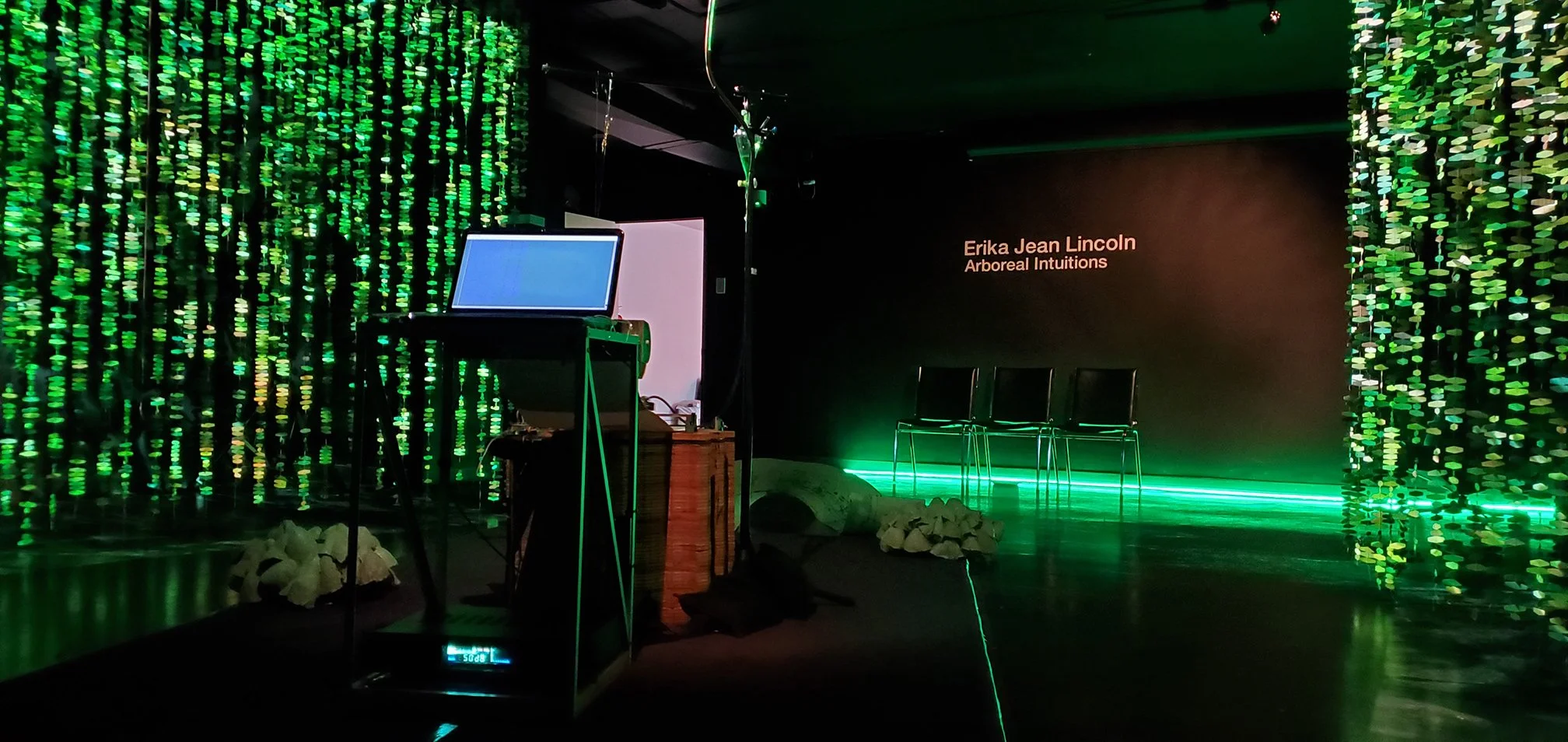
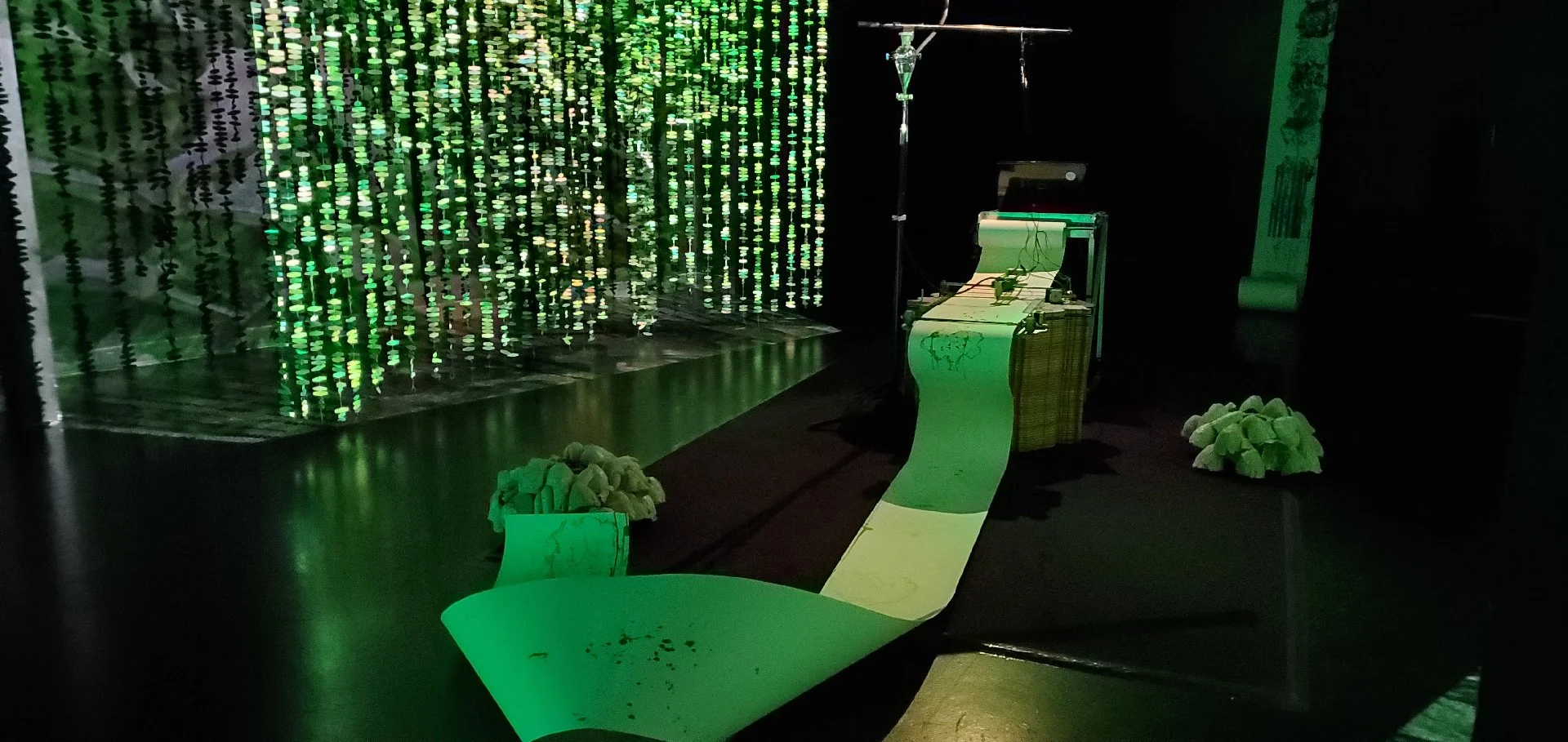
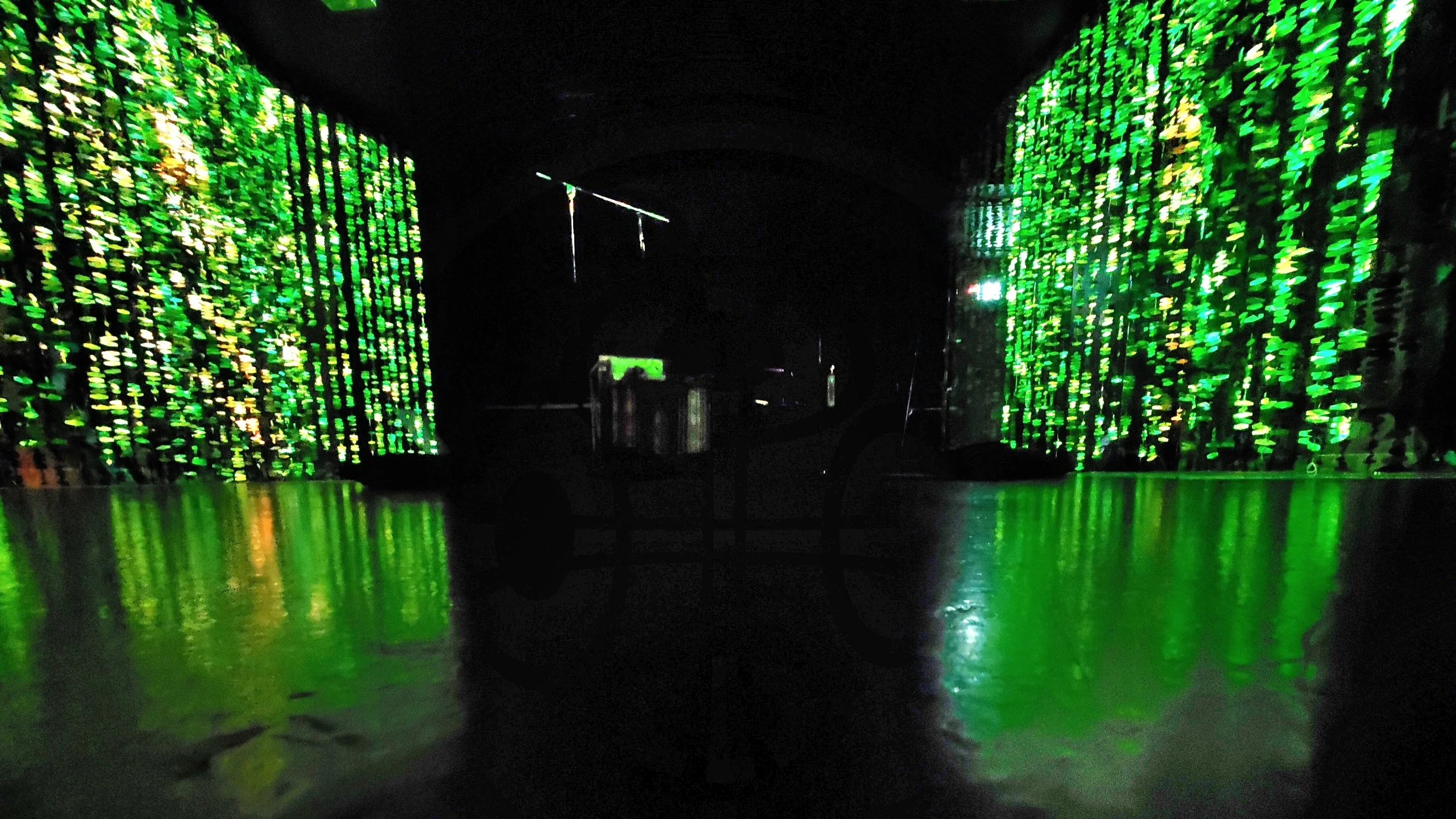
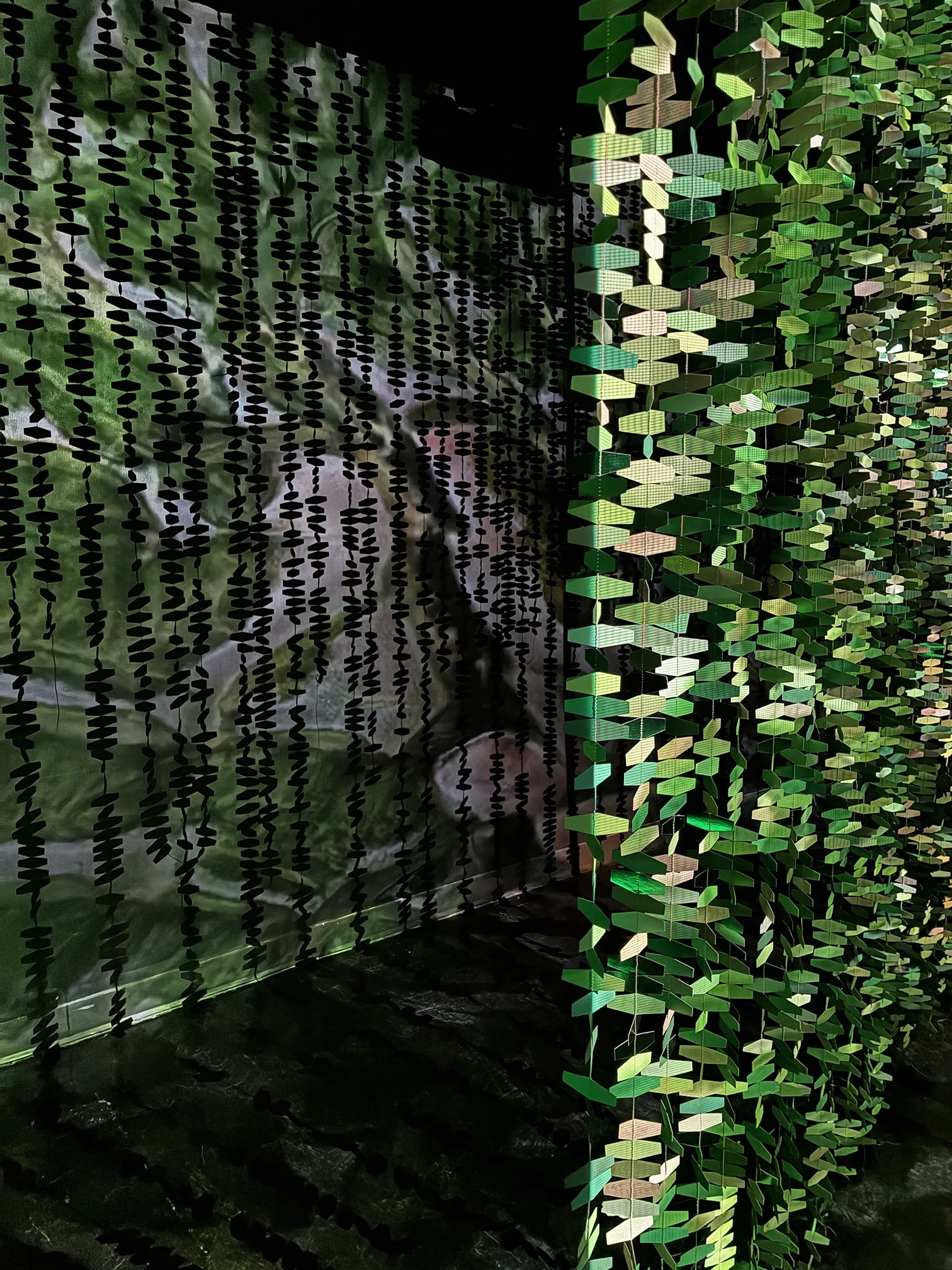
Upon entering the intimate gallery space, the participants are met with a multi-sensory place of engagement. Two of the gallery walls are lit with projections of slow morphing images of ML imagined tree canopies filled with morphing birds and insects, green is the predominant colour with hints of blues, oranges, yellows, and browns. Hanging from the ceiling one meter in front of the projections is a curtain of hexagonal paper cutouts hinting to the tree’s internal cellular anatomy. Participants can move behind and through the curtain activating it, this touch allows for shadows and reflections of the projected images.
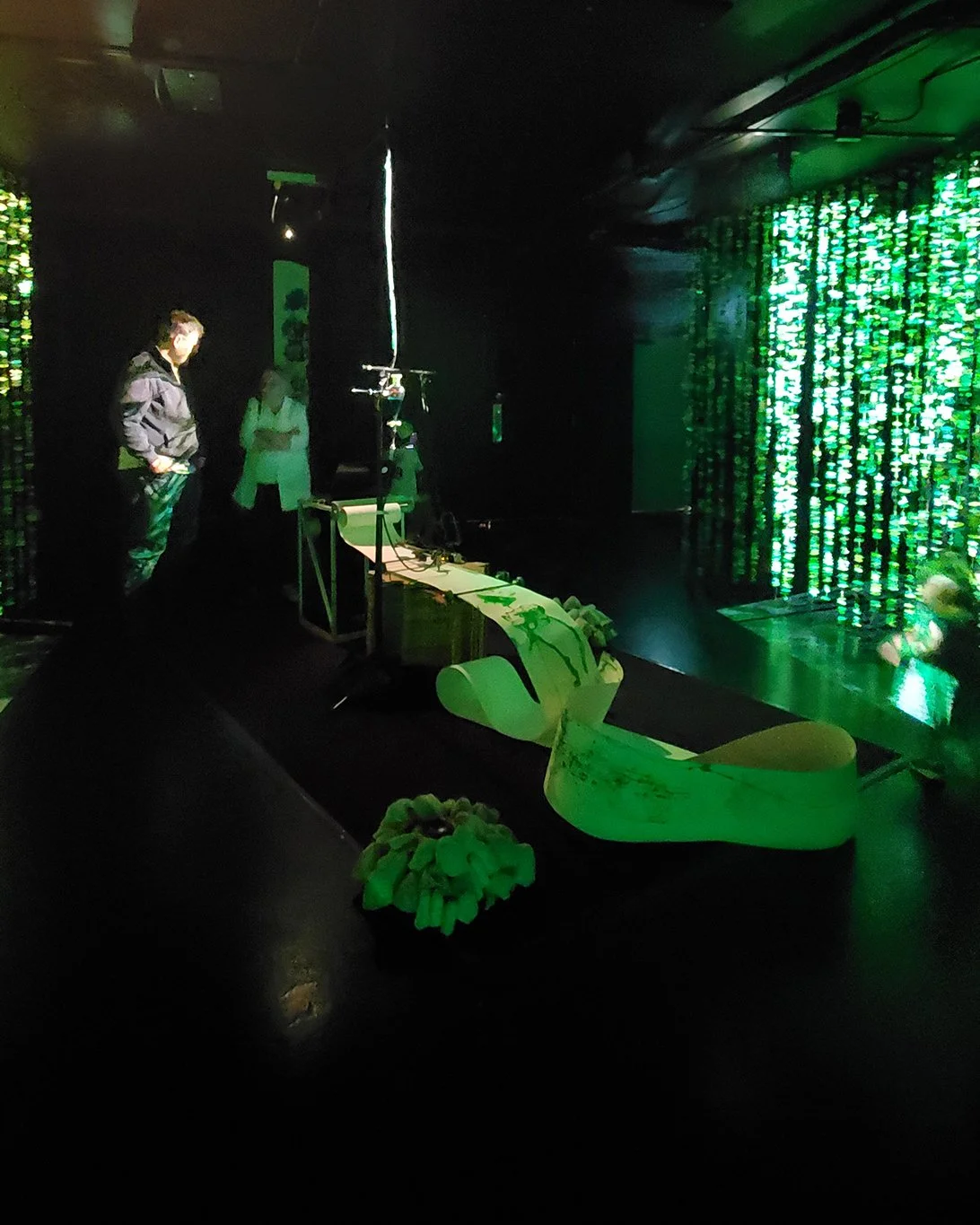
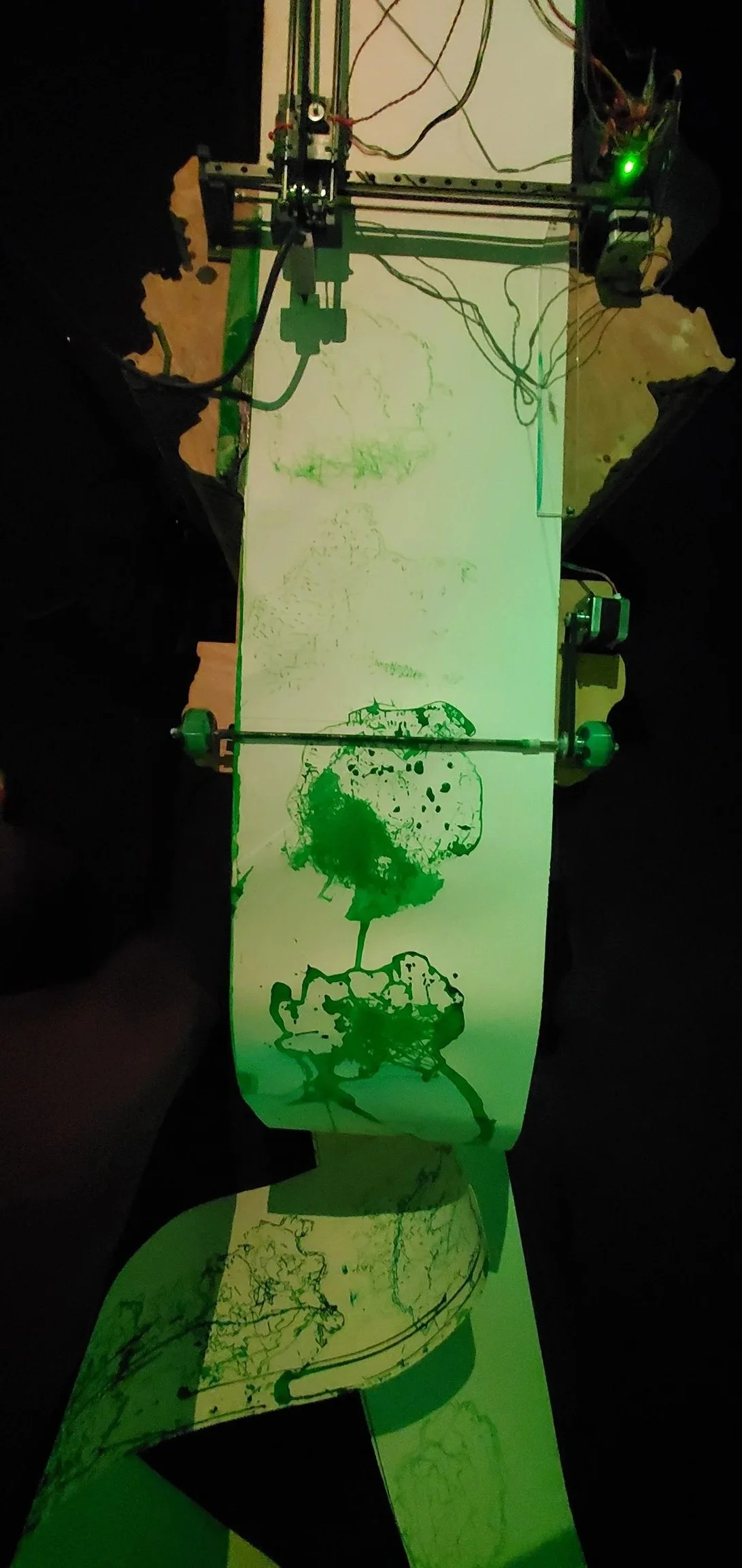
In the center of the gallery sits the drawing machine on a carved wooden plinth, an ink gravity drip for the machine’s pen is hung next to the plinth. A computer and an audio amplifier sit behind the wooden plinth on an aluminum stand.
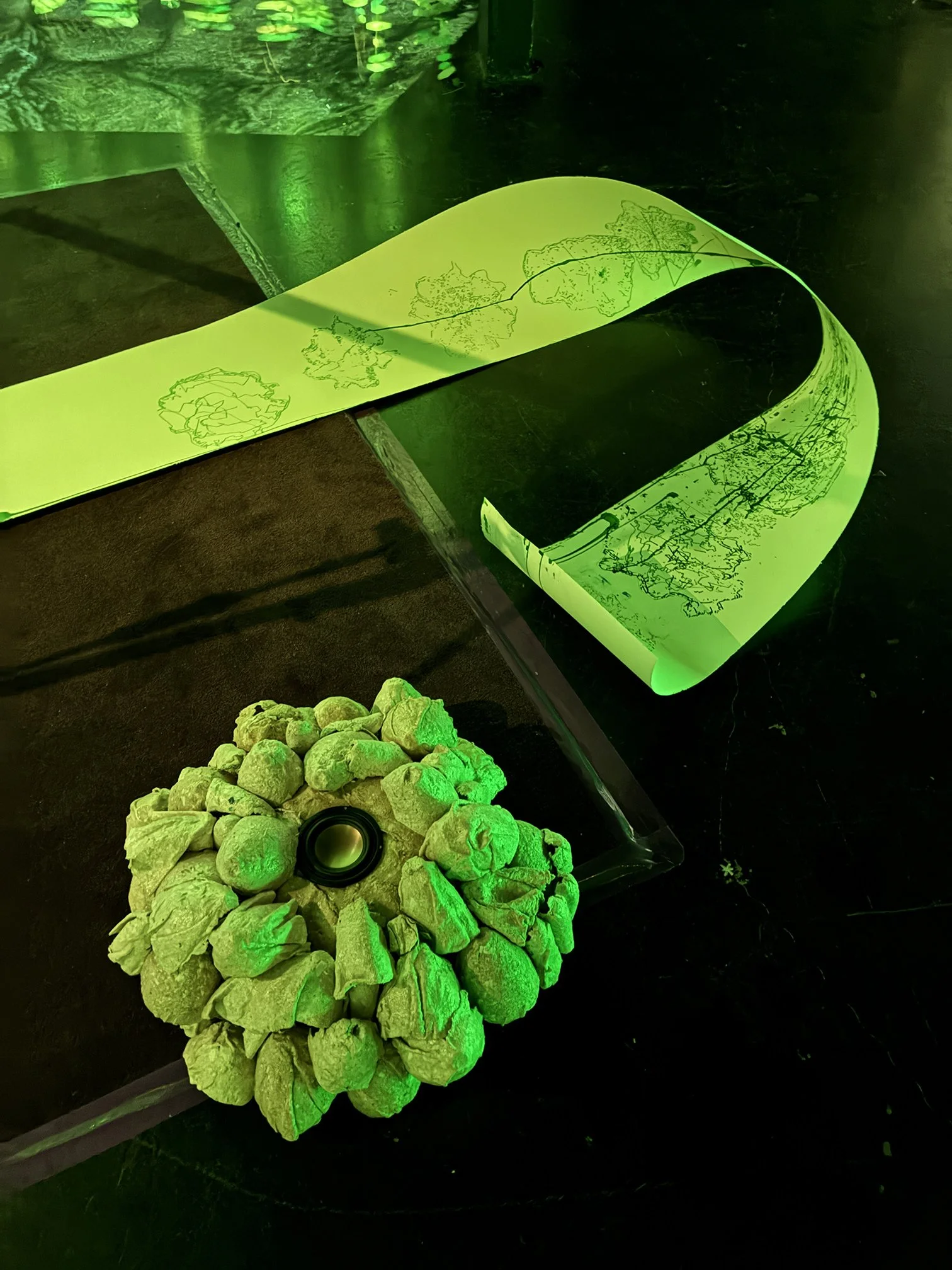
Placed around the aluminum stand are audio speakers made of paper and sawdust, the speakers are designed to be touched so that sound can be felt through the body as well as heard through the ears. The sound composition is generated from a database of field recordings made in the urban forest. They are sampled and mixed through a timing algorithm based on the seasonal life cycles of the multiple beings an elm tree hosts over its lifespan.
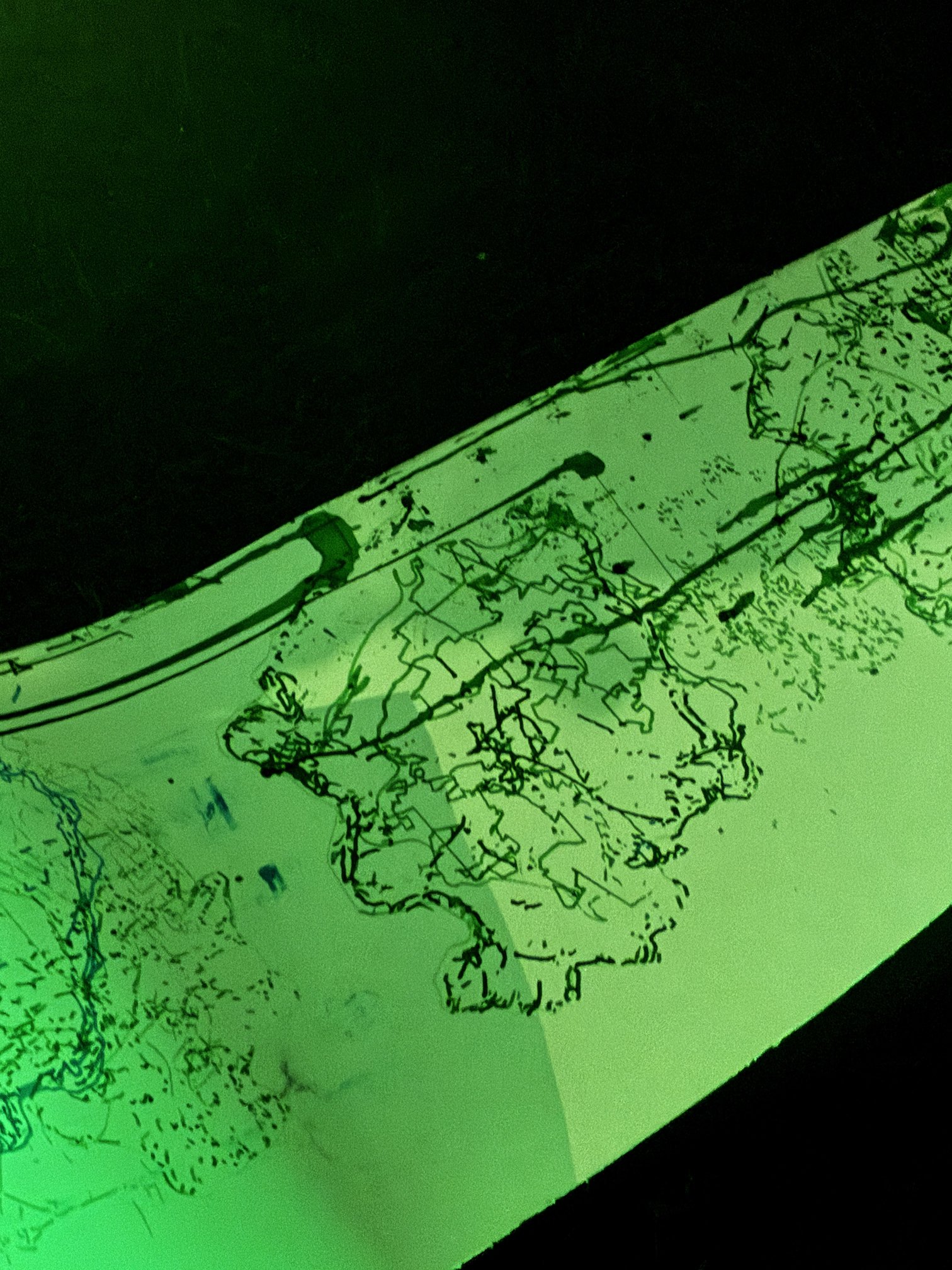
A roll of paper runs from the stand through the drawing machine and onto the floor. The drawing machine is set to activate when a participant is 0.5 meters from the plinth. Using a passive infra-red sensor, a signal is sent to the control computer to advance the paper, retrieve a drawing file from a database, and continue to make a line drawing. The drawings take between 3 to 10 minutes, when the drawing is complete the plotter stops, and the system waits for the next signal. The database holds 100 files generated from a custom trained machine learning model. Each file is a unique set of commands for the drawing machine to plot growth rings of an individual tree.
The drawings are unique to the material circumstances of the plotter. Ink drips and missed lines add to the distinctiveness of each drawing. The limits of memory are alluded to through this translation from the digitally stored images to the mechanically plotted ink drawings.